Monday, January 30

Meditation (A way of living)


An ordinary person may consider meditation as a worship or prayer. But it is not so. Meditation means awareness. Whatever you do with awareness is meditation. "Watching your breath" is meditation; listening to the birds is meditation. As long as these activities are free from any other distraction to the mind, it is effective meditation.

  • Meditation is not a technique but a way of life. Meditation means 'a cessation of the thought process' . It describes a state of consciousness, when the mind is free of scattered thoughts and various patterns . The observer (one who is doing meditation) realizes that all the activity of the mind is reduced to one.There are a variety of benefits that have been linked with the regular practice of meditation. Meditation can bring about healing of both the body and the mind by using deliberation of thought and consideration. There are various physical benefits that can be experienced when meditation is made to be a part of daily life. Some physical benefits of meditation include a decrease in blood pressure and an improvement in breathing due to the increase of air flow that gets to the lungs. Those who use meditation regularly also find that their resting heart rate is lower as well, which takes some of the stress off the heart. Chemicals in the body that are associated with stress are lower as well, which leads to less anxiety. Meditation also promotes youthful skin and a youthful appearance.Meditation is a practice that brings about not only physical benefits, but psychological benefits as well. Bringing oneself to a state of rumination through meditation has amazing effects on the psych of a person. Relaxation and a decrease in stress are rather obvious benefits, but many people do not realize that meditation can also improve moods and memory and decrease moodiness and depression.Following are the steps for meditation with music:

  • 1.
    Choose a good piece of meditation music or meditative, inspirational, instrumental music. Why instrumental music? Because instrumental music stimulates your right brain’s activity (the intuitive side of your brain). Music with lyrics involves your left brain’s activity (the rational side of your brain), because linguistically spoken words makes you think.

    2.
    Set up the music before you begin your meditation. Load your CD player or cue your MP3 player to the playlist or album you've selected. Adjust the volume to your liking or secure headphones in your ears. Have the music start first so you can begin your meditation without interruption.

    3.
    Sit or lie down in a comfortable position. A traditional meditation position is sitting on the floor or on a pillow with your legs folded and your hands resting palms up on your knees. You can also lie down flat on the floor or even on the bed if this is more comfortable or easier for you.

    4.
    Breathe deeply. The basis of meditation is deep breathing and focusing on the breath, and this can be incorporated into meditating with music. As you breathe, allow your mind to flow with the music. You can breathe along with the tempo or flow of the music, or just get lost in the soothing sounds of instruments or voices. Meditation music is designed specifically to relax and rejuvenate your body and mind, and helps you to deepen your relaxation due to its melodic or soothing sound.

    5.
    Allow the sound of the music to become the one thing that you are tuned into. You may experience tingling or goose-bumps--these can be indications of deep relaxation. As the music plays, notice that your mind is truly focused on only the sound of the music and any fleeting thoughts disappear as you follow the music. When the music ends or your set time is up, allow yourself to breathe for a few moments and re-acclimate yourself to the present.Below are some good music for meditation and relaxation. For best effect use headphone of mp3 player or phone or other music playing device.

  • For Deep MeditationFor Instant effect


    Rain sound


    Very deep meditation

    Saturday, December 3

    The Sacroiliac Joint: An Underappreciated Pain Generator


    What is the Sacroiliac Joint?

    The Sacroiliac joints are located at the very bottom of the back. You have one either side of the spine. The Sacroiliac joints help make up the rear part of the pelvic girdle and sit between the sacrum (vertebrae S1-S5) and the Ilia (hip bones).

    The function of the SI joints is to allow torsional or twisting movements when we move our legs. The legs act like long levers and without the sacroiliac joints and the pubic symphesis (at the front of the pelvis) which allow these small movements, the pelvis would be at higher risk of a fracture.

    The concept of the SIJ causing lower back pain is now pretty well understood. However, due to the complex anatomy and movement patterns at the joints and area in general, evaluation and treatment of sacroiliac dysfunctions is still controversial.

    SIJ dysfunction is a term which is commonly used when talking about sacroiliac injuries. This dysfunction refers to either hypo or hyper mobility (low or high respectively). Or in other words, the join can become 'locked' or be too mobile. This can then lead to problems with surrounding structures such as ligaments (e.g. Illiolumbar ligament) and muscles, which means SIJ problems can cause a wide range of symptoms throughout the lower back and buttocks, or even the thigh or groin.

    Causes of Sacroiliac Pain

    Causes of Sacroiliac joint pain can be split into four categories:

    Traumatic

    Biomechanical

    Hormonal

    Inflammatory joint disease

    Traumatic

    Traumatic injuries to the SIJ are caused when there is a sudden impact which 'jolts' the joint. A common example is landing on the buttocks. This kind of injury usually causes damage to the ligaments which support the joint.

    Biomechanical

    Pain due to biomechanical injuries will usually come on over a period of time and often with increased activity or a change in occupation/sport etc. The most common biomechanical problems include:

    Leg length discrepancy

    Overpronation

    'Twisted pelvis'

    Muscle imbalances

    Hormonal

    Hormonal changes, most notably during pregnancy can cause sacroiliac pain. In preparation for giving birth, the ligaments of the pelvis especially increase in laxity. Combining this with an increase in weight putting extra strain on the spine, may lead to mechanical changes which can result in pain.

    Inflammatory joint disease

    Spondyloarthropathies are inflammatory conditions which affect the spine. These include Ankylosing Spondolitis which is the most common inflammatory condition to cause SI joint pain.

    What are the Symptoms of SI Joint Injury?

    Pain located either to the left or right of your lower back. The pain can range from an ache to a sharp pain which can restrict movement.

    The pain may radiate out into your buttocks and low back and will often radiate to the front into the groin.

    Occasionally there may be referred pain into the lower limb which can be mistaken for Sciatica.

    Classic symptoms are difficulty turning over in bed, struggling to put on shoes and socks and pain getting your legs in and out of the car.

    Stiffness in the lower back when getting up after sitting for long periods and when getting up from bed in the morning.

    Aching to one side of your lower back when driving long distances.

    There may be tenderness on palpating the ligaments which surround the joint.


    Diagnosis
    History: Approximately 80% of patients with sacroiliac joint dysfunction can identify a specific episode of trauma that initiated symptoms. The trauma, however, often seems too minor to cause a persistent and severe problem. A typical injury results from lifting a heavy object with a twisting motion, such as removing a suitcase from a car trunk. Another common mechanism of injury is a slip and fall. When the history contains these or similar injuries, and symptoms remain without progressive improvement, a specific evaluation for sacroiliac joint dysfunction should be considered.

    In about 20% of cases, no specific traumatic episode is recalled, and the onset of symptoms is described as insidious. When there is no history of a traumatic episode, rheumatologic disorders-such as ankylosing spondylitis-should be excluded before a diagnosis of sacroiliac joint dysfunction is entertained.

    Physical examination: Patients with sacroiliac joint dysfunction can present with signs and symptoms that are very similar to those of intervertebral disc disease. Many patients have pain confined to the area of the sacroiliac joint. Others have pressure on the S1 nerve and pain following the distribution of that pressure, in a pattern known as the pseudo S1 pattern. Physicians frequently assume that a patient with this pain pattern has L5-S1 disc herniation, and they may order an MRI to confirm the diagnosis of herniation. If the MRI is negative, they may conclude that the patient has a somatoform disorder. However, the presence of a sacroiliac joint disorder should be considered.

    Diffuse pain radiating to the entire lower extremity is present in approximately 25% of patients with sacroiliac joint dysfunction. In the past, this pain pattern has been thought to represent a nonorganic or hysterical pattern.

    Various physical examination maneuvers have been used to identify a sacroiliac origin of pain. Patrick's test, also known as the FABER test (for flexion, abduction, and external rotation) is probably the best known. Another commonly employed maneuver is Gaenslen's test, which includes hyperextension of the hip. Recent information has shown that such screening tests are not reliable in identifying pathology of sacroiliac joint.

    The single feature consistently found among patients with sacroiliac joint dysfunction is pain location; when asked to point to where the pain seems to be originating, patients point to the area immediately around the posterior superior iliac spine. Thus, dysfunction of the sacroiliac joint should be considered in any patient complaining of pain in this area, even if the various traditional physical examination maneuvers are negative.

    Confirmation: Diagnosis of sacroiliac joint dysfunction can be confirmed with a diagnostic injection performed by a physician skilled in the technique. Blind injections into the area of the sacroiliac joint are inadequate. Fluoroscopy or computed tomography guidance is necessary to ensure that the injectant is administered to the correct area.

    The injection should involve the placement of a small volume (1 to 3 mL) of local anesthetic into the synovial portion of the joint. Correct placement is verified by the inclusion of contrast material in the injectant, which should outline the synovial portion of the joint. Large-volume injections or injections into the ligamentous portion of the joint will extravasate into the region of the lumbosacral plexus and can produce both false-negative and false-positive results.

    Treatment of SIJ Pain

    What can you do to treat sacroiliac joint pain yourself?

    • Rest from any activities which cause pain.
    • If the surrounding muscles have tightened up, use a warm-pack to help them relax.
    • Don't heat if an inflammatory condition is suspected.
    • Anti-inflammatory medications may be helpful. Always check with your Doctor first.
    • Try wearing a Sacroiliac back belt

    Physical therapy can be very helpful. Pain in the SI joint is often related to either too much motion or not enough motion in the joint. A physical therapist can teach various stretching or stabilizing exercises that can help reduce the pain. A sacroiliac belt is a device that wraps around the hips to help stabilize the SI joints, which can also help the SI joint pain. Other options to stabilize the SI joints include yoga, manual therapy.

    How can sacroiliac joint dysfunction be prevented?

    Unfortunately, SI joint dysfunction is not preventable in some people. For many, it is an unfortunate part of the normal aging process. However, the severity can be reduced through treatment with medication, injections, or physical therapy. Maintaining a healthy body weight and good conditioning can reduce the chances of developing SI joint dysfunction and other forms of arthritis. By reducing the loads on the joints, there is less chance for cartilage damage and subsequent arthritis.

    Tuesday, November 29

    Sun Salutation (Surya Namaskar) Step by step


    Surya Namaskar (Sun Salutation) means a salute to the sun. It is a continuous series of 8 related Yoga postures, some done twice, in what totals 13 poses. It is designed to warm up your whole body and integrate the body, mind and breath. The Sun Salutation is a warm up or toning exercise and is considered the best of all Yoga exercises as it stretches, compresses, arches and reinforces all the major muscles of the body, as well as the digestive and respiratory organs. It also helps develop flexibility, strength, balance, concentration and focus. Sun Salutation is a great way to synchronize your breath and can be practised twice a day. Surya namaskar should be done minimum 12 times per day. Given below are the step by step instructions.

    Instructions for Sun Salutation

    Namaskar (Salute)

    Start in a standing position, facing the sun. Both your feet should touch each other, palms joined together, in prayer pose.


    Ardha Chandrasana (Half Moon Pose)
    With a deep inhalation, raise both arms above your head and tilt slightly backward arching your back.


    Padangusthasana (Hand to Foot Pose)
    With a deep exhalation, bend forward and touch the mat, both palms in line with your feet, forehead touching your knees.


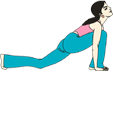
    Surya Darshan (Sun Sight Pose)
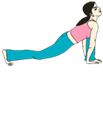
    With a deep inhalation, take your right leg away from your body, in a big backward step. Both your hands should be firmly planted on your mat, your left foot between your hands, head tilted towards the ceiling.


    Purvottanasana (Inclined Plane)

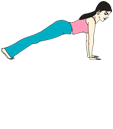
    Hold your breath and take your right leg back to join your left leg. Now straighten both your hands, legs and back. Your neck spine, thighs and feet should be in a straight line.


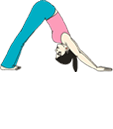
    Adho Mukha Svanasana (Downward Facing Dog Pose)

    With a deep exhalation, shove your hips and butt up towards the ceiling, forming an upward arch. Your arms should be straight and aligned with your head.


    Sashtang Dandawat (Forehead, Chest, Knee to Floor Pose)

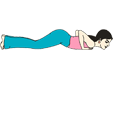
    With a deep exhalation, lower your body down till your, forehead, chest, knees, hands and feet are touching the mat, your butt tilted up. Take a normal breath in this pose.


    Bhujangasana (Cobra Pose)
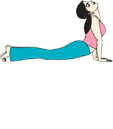
    With a deep inhalation, slowly snake forward till your head is up, your back arched concave, as much as possible.


    Adho Mukha Svanasana (Downward Facing Dog Pose)
    Exhaling deeply, again push your butt and hips up towards the ceiling as in position 6, arms aligned straight with your head.


    Surya Darshan (Sun Sight Pose)
    Inhaling deeply, bring your right foot in towards your body, in a big forward step. Both your hands should planted firmly on your mat, right foot between your hands, head tilted towards the ceiling.


    Padangusthasana (Hand to Foot Pose)
    Exhaling deeply, rise up and touch the mat, keeping both your palms in line with your feet, forehead touching your knees.


    Ardha Chandrasana (Half Moon Pose)
    Inhaling deeply, raise both your arms above your head and tilt slightly backward.


    Namaskar (Salute)

    Return to stand facing the sun, both feet touching, palms joined together, in prayer pose.


    Benefits of Sun Salutation

    - You don't need to be doing yoga regularly in order to practice the Surya Namaskar. If performed correctly, this exercise does not strain or cause injury. If performed in the morning, it relieves stiffness, revitalises your body and refreshes the mind. Do it during the day and it will instantly boost you up, practice it after sundown and it helps you unwind.

    - Not only does the Surya Namaskar give you a great stretch and keep you fit physically (it is extremely beneficial for your joints, ligaments and improves flexibility and posture), but is also does wonders for your mental and emotional health.

    - Surya Namaskar stimulates almost every system in your body - the cardiovascular system because it keeps the heart strong and, the digestive system as well as the nervous system.

    - It also makes endocrinal glands like the thyroid, parathyroid and pituitary glands, function normally.

    - Practising the Surya Namaskar regularly is also known to ease stress and give you peace of mind besides increasing your levels of concentration.

    - If you have trouble sleeping at night, the Surya Namaskar will help you fall asleep without using any external stimulants.

    - It is said that twenty-four Surya Namaskars, if done properly, are equal to five hundred sit-ups / pull-ups. It may be a statement of exaggeration, but it is worth to experience the physical fitness that you attain after you start practicing the Surya Namaskar. At the beginning of the practice, one Surya Namaskar consumes 02.30 KCL. This exercise burns out a lot of calories and reduces body mass and body weight.

    Contraindications

    Sun Salutation is best avoided by pregnant women, people suffering from high blood pressure, or those nursing back aches or injuries, chronic glaucoma, heart problems.